


FIFA plans to create a new organization to manage the commercial activities of the tournaments on a larger scale rather than selling the ownership of the World Cup. World football's governing body wants to sell a maximum of 20 percent of the company's proposed stake to outside investors at a valuation of around $20 billion. And intense debate has started around this proposal.
FIFA claims its 211 member federations around the world could receive extra money if the plan is implemented. According to calculations, each member federation can get about 40 million US dollars. But soon after the announcement of such a big financial plan, there was concern and discontent among football organizations in Europe, Asia and North and Central America.
FIFA has proposed setting up a new subsidiary to manage the commercial activities of its major international tournaments, including the World Cup. The potential value of this company is estimated to be around 20 billion US dollars.
The most talked about aspect of the plan is that a maximum of 20 percent of the company's shares can be sold to outside investors. That is, FIFA is looking to create opportunities to raise large amounts of new investment from its commercial activities.
But this does not mean handing over the ownership of the World Cup to someone else, FIFA has made it clear.
After the plan was unveiled, objections were raised by regional football associations in Europe, Asia and North and Central America. Their main concern is with decision-making process and transparency.
They alleged that there was not enough consultation with the concerned confederations and stakeholders before announcing plans for such a major change. As a result, questions have arisen at various levels of football administration around this initiative of FIFA.
The extent to which the participation of outside investors can affect the commercial structure of the world's most popular sporting events, especially the World Cup, is a matter of great debate.
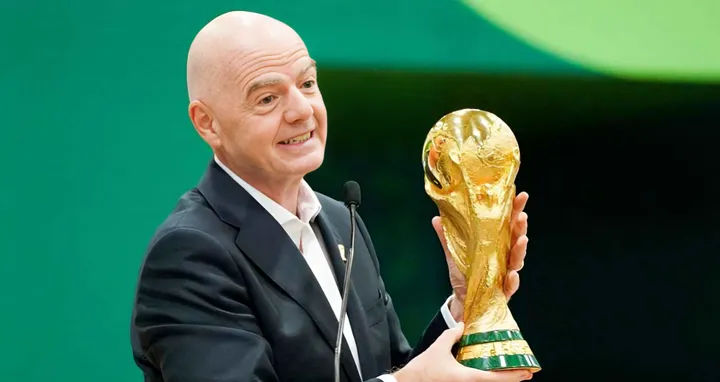
Faced with criticism, FIFA president Gianni Infantino has tried to clarify the matter. This is not a final decision and FIFA is not acting unilaterally, he said.
According to him, the proposal was brought forward to get the views of the member federations. Further decisions will be taken based on the opinions and suggestions of the members.
That is, it is currently at a proposal stage. FIFA member countries have been given a deadline of September 19 to submit their comments.
This is where most of the confusion is created. It has been said by FIFA that even if the plan is implemented, FIFA will retain control over major international tournaments including the World Cup, Women's World Cup.
Infantino has assured that no outside investors will be able to establish control over the management and decision-making of FIFA or the World Cup.
That is, although there is a plan to bring investment in the commercial part through the sale of shares, it is said that the management of the tournament, organizational decisions and control of football will remain with FIFA.
One of FIFA's biggest arguments is financial advantage. The organization claims that all of its 211 member federations will benefit from the new structure.
According to the proposal, each member federation would be eligible for additional funding of up to USD 40 million. In FIFA's view, this will allow more money to be spent on football infrastructure, development programs and other programs around the world.
But critics question how much FIFA will become commercially dependent on this money in the future and how much the influence of outside investors will increase.
Concerns over FIFA's plans have been most visible in the European football arena. UEFA president Aleksandar Ceferin has called an emergency meeting in this regard.
In this meeting, member countries will discuss FIFA's plans and try to take a joint position if necessary.
International media reports have also said that some European countries may consider boycotting future World Cups and other FIFA competitions if FIFA does not withdraw from the plan. Although it is still in the stage of possible action.
Not only Europe, the Asian Football Confederation or AFC and CONCACAF, the football body in North and Central America and the Caribbean, have also expressed concern over FIFA's plan.
Their questions mainly revolve around two areas—how transparent the planning process was and whether there was sufficient consultation with stakeholders before such a big decision was taken.
As a result the matter is now not just an internal commercial decision by FIFA; Rather, the future structure of international football administration has become a big discussion.
Glenn Micallef, the European Union's head of sport, also warned against FIFA's plans. According to him, the commercial success of football is certainly important, but excessive commercialization can be detrimental to the game in the long run.
The main point of his speech is that money and investment should help the development of football; But it should not become a tool to establish control over football.
All in all, FIFA's new plan has yet to be finalized. Further decision on the matter will be taken after taking the opinion of the member federations.
FIFA says it has no plans to sell control or ownership of the World Cup. Instead, their goal is to provide additional money for member countries by strengthening the commercial activities of major tournaments, including the World Cup, through new structures.
But the issue has now become a major international debate due to objections and questions about transparency from football associations in Europe, Asia and North and Central America.
It will be clear only after taking the opinion of the members until September 19 - whether this ambitious plan of 20 billion dollars of FIFA will become a reality, or will stop here in the face of strong opposition.